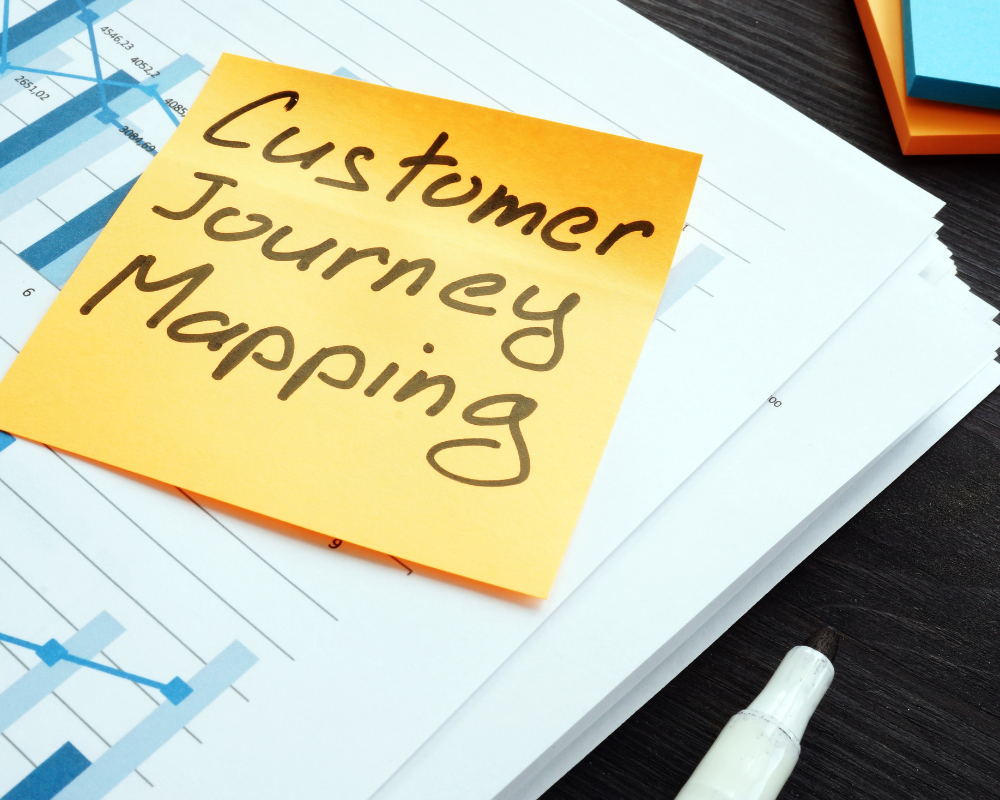






Every business has unique buyer personas, pain points, and pathways. That’s why our services focus on mapping your user journey first, then creating content that aligns with that blueprint.
We begin by mapping your full buyer’s journey: awareness, consideration, decision, retention, and advocacy. We gather data from analytics, customer interviews, and heatmaps to surface pain points and opportunities. This journey blueprint becomes the backbone of your content strategy.
Once your journey is mapped, our strategists build persona-driven content flows. We decide which content types (e.g., blog posts, guides, case studies, video) fit at each stage and how they lead the customer forward. This ensures your content isn’t random, but intentional and sequential.
We craft content targeted for each journey stage. Awareness content might include educational blog posts or infographics; for consideration, we provide comparison guides or white papers; for decision, we deliver customer stories, demos, or conversion-focused copy; for retention, we develop onboarding content, newsletters, loyalty materials; and for advocacy, we design referral or testimonial content.
Content is useless without timing and context. We orchestrate how content is delivered with email sequences, retargeting copy, push notifications, drip campaigns, mapping each piece to the proper touchpoint and user intent. This ensures consistent, nonintrusive progression through your funnel.
We track how users respond to each content piece. Using A/B tests, click paths, dwell time, and funnel drop-off rates, we refine the journey and improve content performance continually. The result is a living, evolving customer experience that boosts conversions month after month.
Once the core journey is optimized, we scale. New personas, markets, languages, and channels (e.g., chat, SMS, in-app content) allow your journey-based content ecosystem to grow without breaking coherence.
Content for content’s sake is no longer enough. According to Demand Metric, content marketing generates 3× more leads than outbound marketing while costing 62% less. But when that content is mapped precisely to user journey stages, conversion rates increase further, which is often by up to 25–35% in funnel movement.
Here’s the major difference you’ll get with iTitans Marketing:
We don’t believe in generic content. We believe in experience-led storytelling powered by data. Here’s how we’re different:
The process is hands-on, iterative, and transparent, which is built to deliver the business outcomes you care about.
We start with workshops and interviews with your internal teams and existing customers to gather insights.
We map the ideal journey, then overlay your current content to identify gaps, friction points, and missed opportunities.
We lay out content assets, channels, timing, and triggers in a master roadmap.
We produce the content that is written, visual, and interactive, and deploy it across your website, email, social, ad channels, chatbots, and more.
We measure KPIs like conversion rate by stage, time to purchase, content engagement, and optimize content, timing, or placement.
We grow the content journey by onboarding new customer segments, channels, and content formats, always maintaining coherence.
“We came to iTitans with an idea, and they turned it into a revolution. Their creativity and strategy have completely transformed our brand.”

“The team at iTitans doesn’t just market; they breathe life into your brand. They understand what makes people tick—and they make it happen.”
“We came to iTitans with an idea, and they turned it into a revolution. Their creativity and strategy have completely transformed our brand.”
“The team at iTitans doesn’t just market; they breathe life into your brand. They understand what makes people tick—and they make it happen.”

A frequent mistake is treating the map as static: many brands build it once, then forget it. Another is ignoring emotional states or motivations, focusing only on actions. And when it comes to content, some produce generic content without aligning it to journey stages, causing mismatches.
To validate, you compare your map’s assumptions with real data: analytics (e.g. drop-off rates on pages), CRM and funnel metrics, direct customer interviews or surveys.
When done right, companies often see a measurable boost. For example, organizations using journey maps report a 10–20% increase in customer satisfaction and a 15–20% drop in churn.
Yes, in many cases. Different personas may have distinct motivations, pain points, and paths. A tech buyer might research differently from a retail shopper. Having segment-based maps ensures your content is more precise and relevant.
In awareness, formats like blog posts, infographics, social posts, short videos, and how-to guides work well to attract and educate. In consideration, longer content such as whitepapers, comparison sheets, webinars, and email nurturing sequences become valuable.